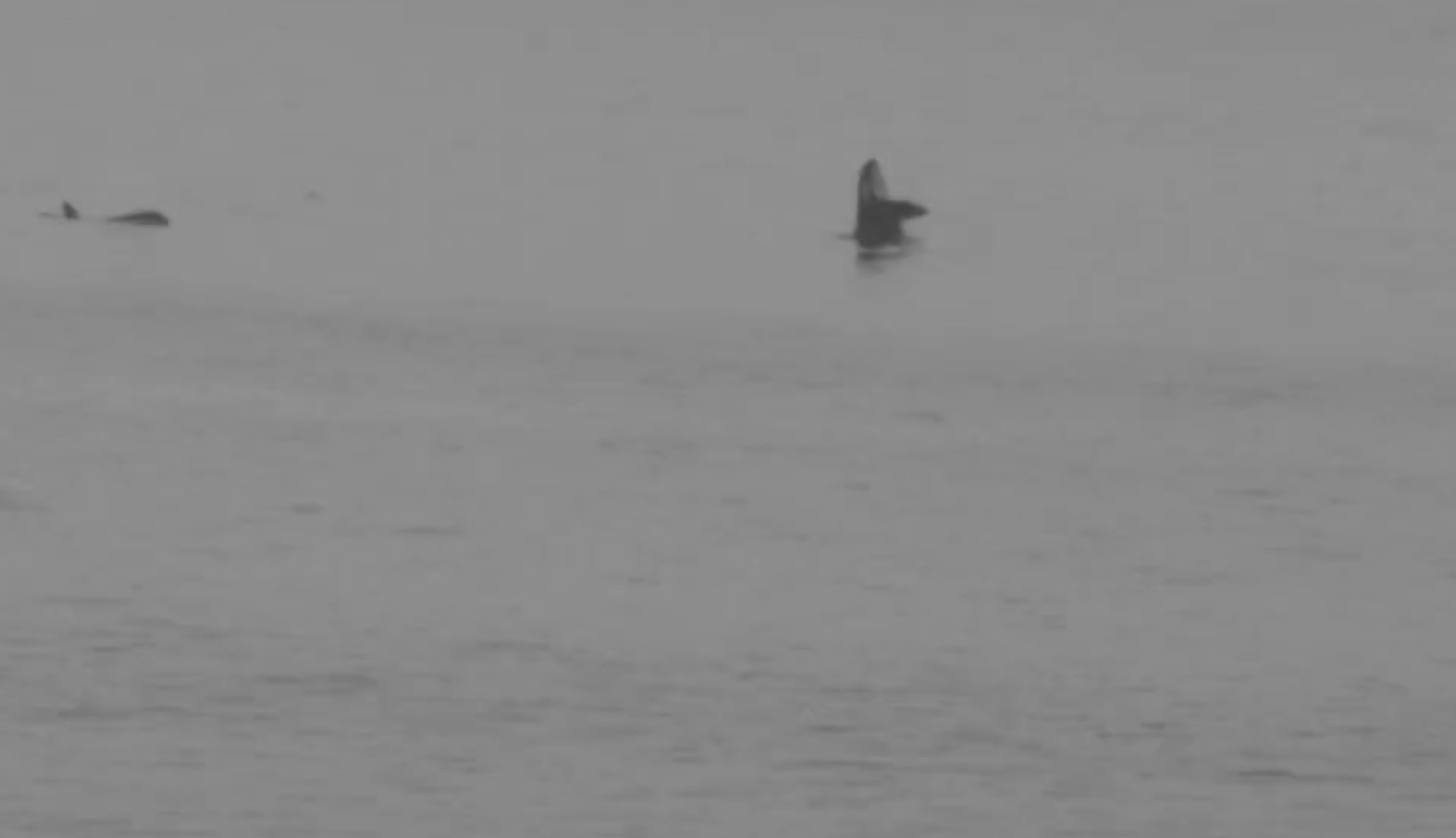
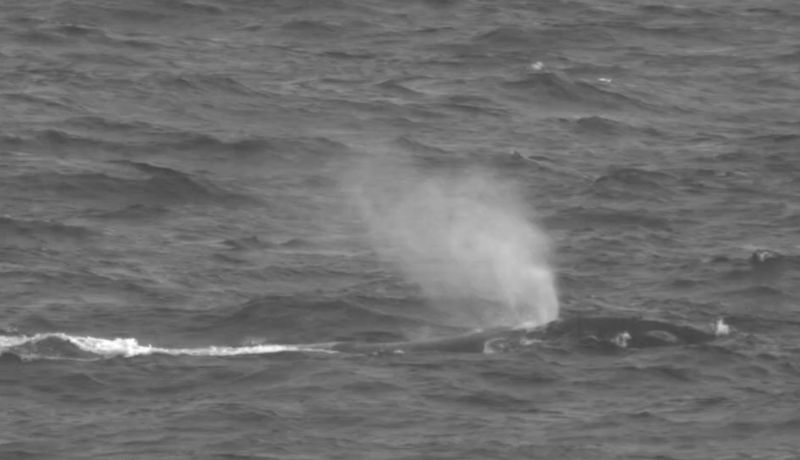
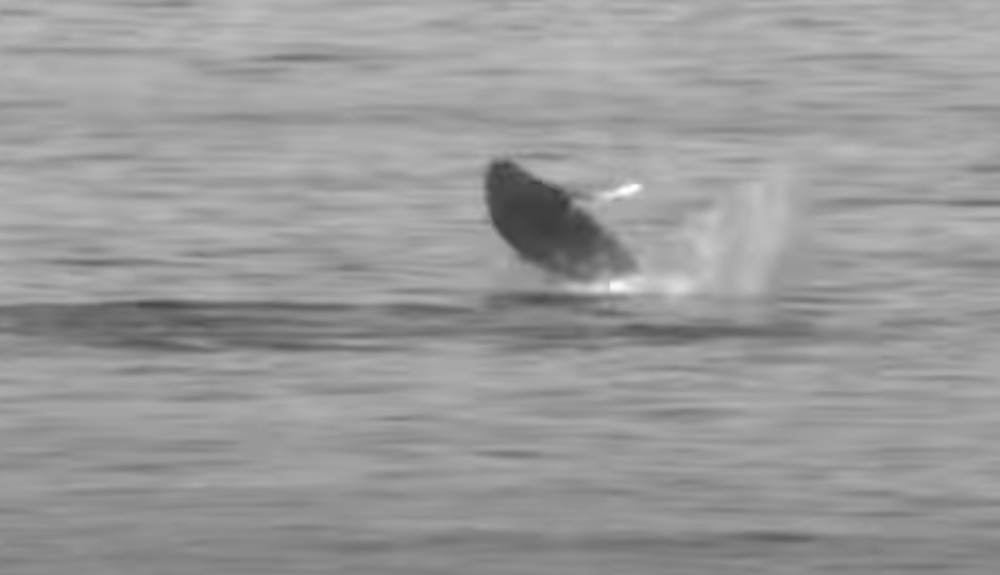
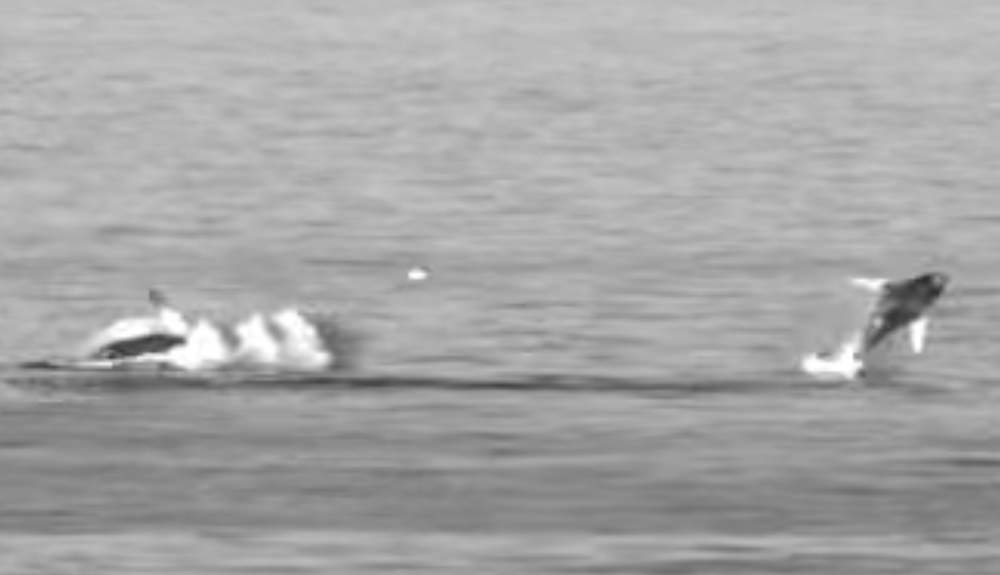
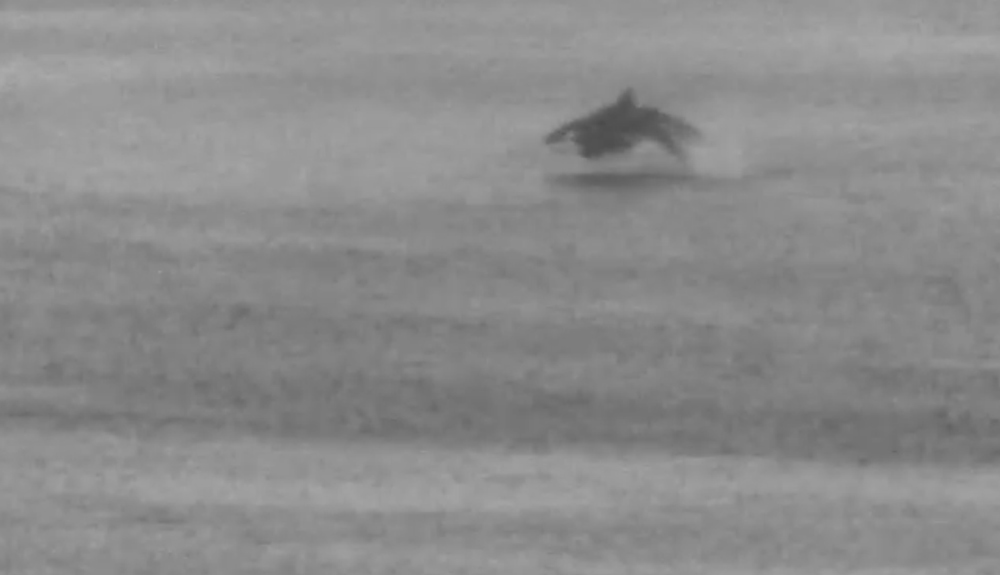
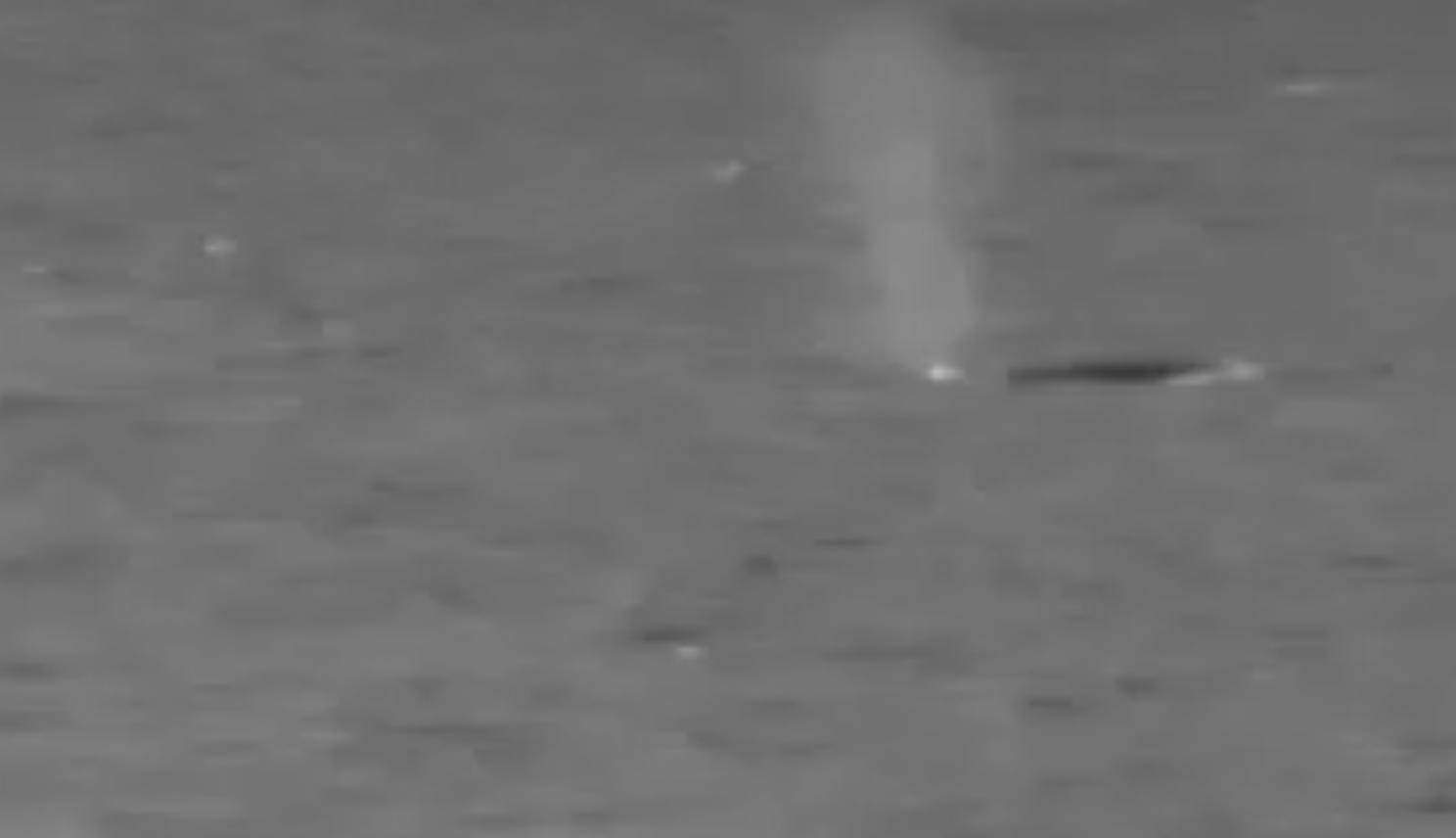
WhaleSpotter combines advanced AI detection models with visual inputs to detect whales in real time, day and night. Our system continuously scans the water to detect whale presence and deliver rapid alerts to crews, control rooms, and operational dashboards. Every detection is reviewed within seconds and verified by trained expert spotters 24/7 to ensure reliable alerts teams can act on with confidence. Our process works to ensure near zero false positives, and reduces vessel strike risk by over 90 percent.
Core capabilities
Long Range Detection
WhaleSpotter reliably detects whales up to approximately 7 km (about 4 nautical miles) away from a vessel or installation, much greater than distances comparable to a human with binoculars, giving ships and offshore operators more time and distance to adjust course or speed.
Daytime & Nighttime Operation
WhaleSpotter operates 24/7, including at night and in low-light or challenging visibility conditions, such as haze, as detection is based on thermal signatures rather than visible light. AI and expert verification work around the clock.
AI-Enhanced Real-Time Notification
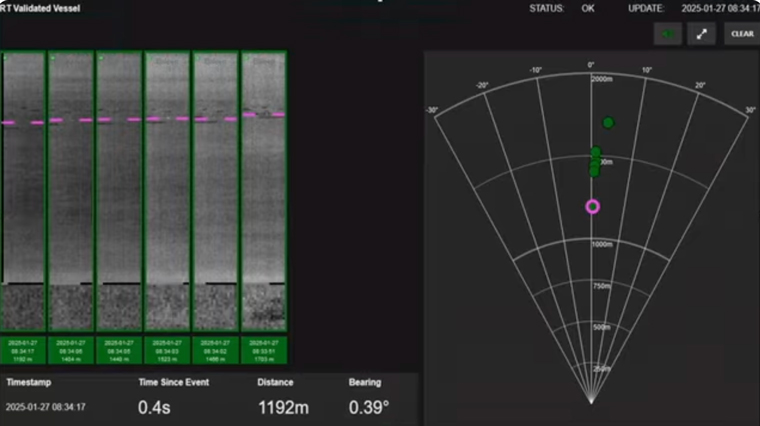
Highly stabilized infrared thermal cameras mounted on a ship’s deck or near an operation continuously scan the water’s surface, picking up warm heat signatures from whales. An artificial intelligence model continuously analyzes the thermal imagery in real time to identify patterns consistent with whale surfacings.
Expert Verification
WhaleSpotter’s expert verification by spotters adds a critical check to the automated detection pipeline, combining the speed of camera detection and AI with the judgment of trained experienced analysts so alerts are both fast and dependable. This hybrid model optimizes precision and recall ensuring near zero false positives and reducing vessel strike by over 90 percent.
Species Identification
WhaleSpotter’s trained expert spotters help identify species, when the AI cannot, by observing whale size and shape, along with the whale’s behavior, location and time of year, when validating detections. Data can be shared with local stakeholders for biodiversity assessments and scientific research.
Reliability
WhaleSpotter has been designed to withstand the harshest maritime conditions from the Arctic to the Tropics. The hardware has been field-tested for over a decade. Every WhaleSpotter is encased in marine-grade housing.
The Monitoring System
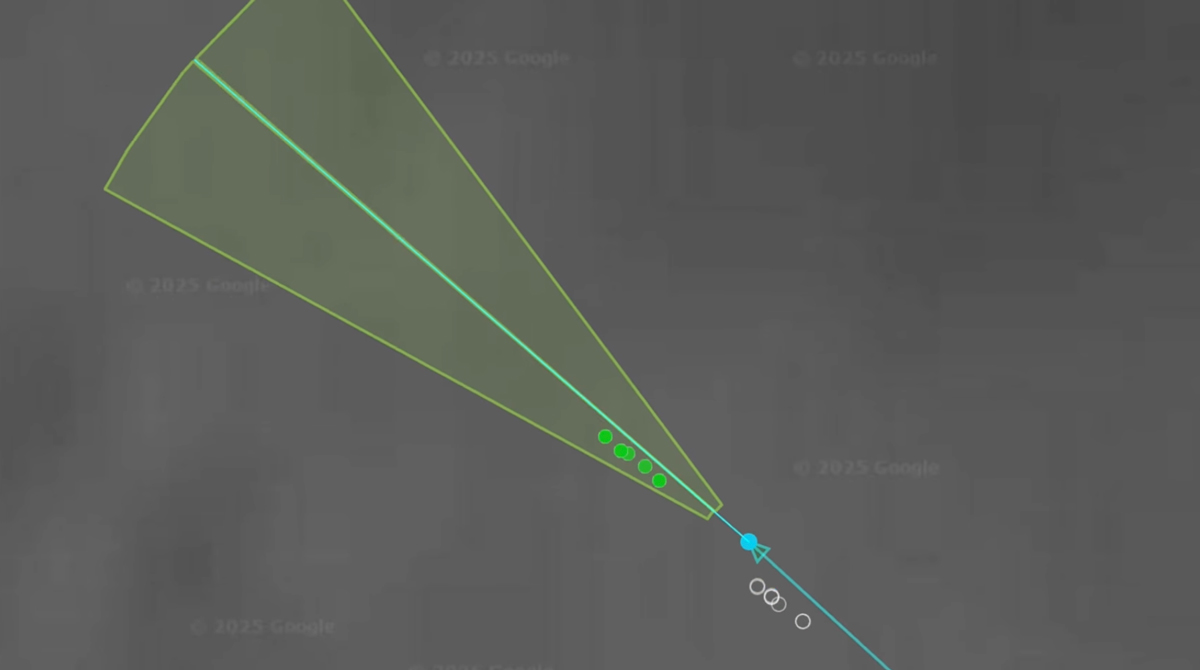
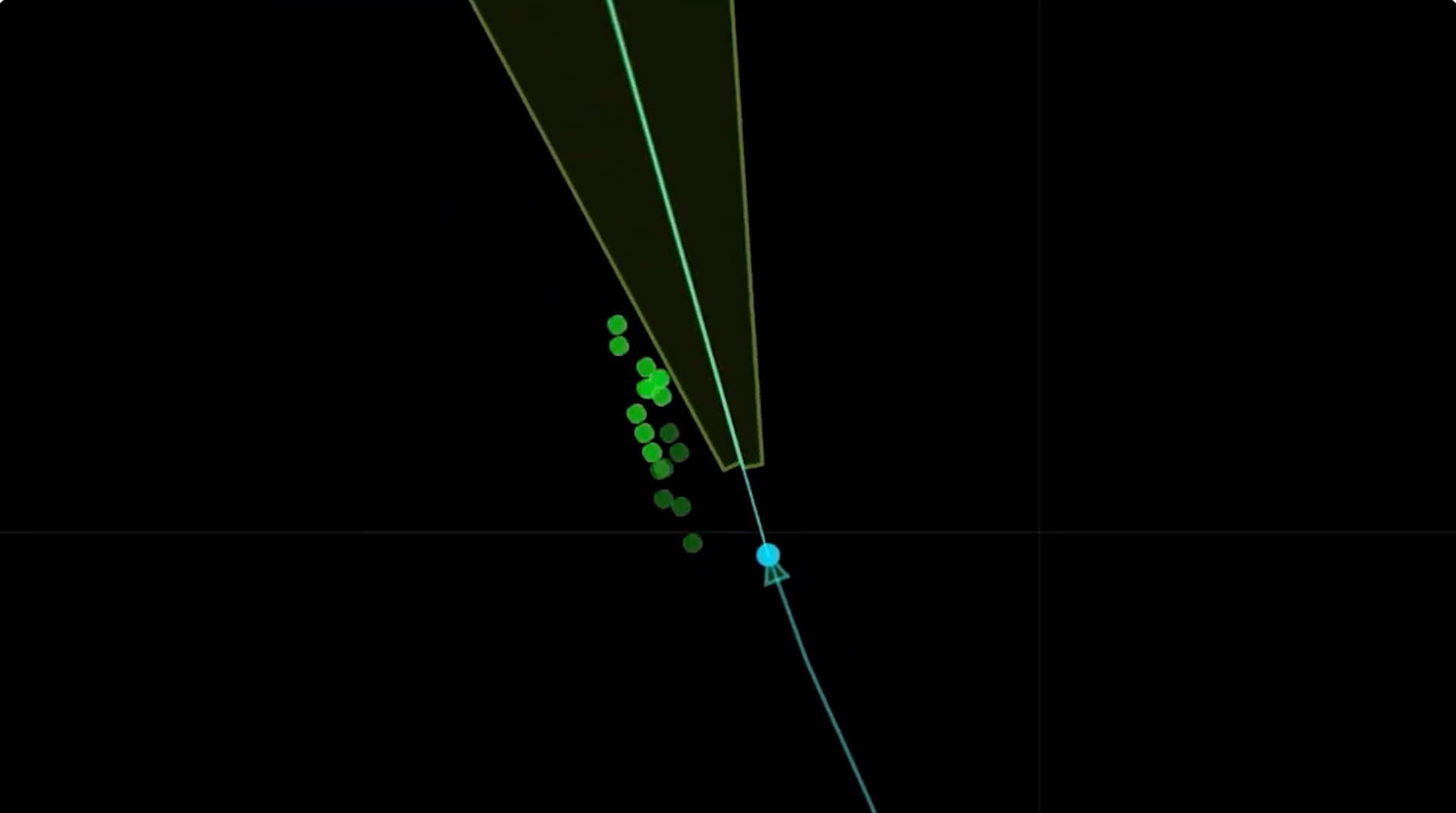
Our powerful, intuitive system design is applicable for a wide range of maritime operations. It works for vessels of all kinds, as well as offshore energy development platforms, ports, harbors, and lighthouses. Built to integrate seamlessly with existing maritime systems, WhaleSpotter delivers clear, real-time, 24/7 situational awareness.
24/7 Expert Verification
WhaleSpotter employs a global network of marine mammal experts with protected species credentials, on call 24/7 to confirm whale presence.
When our AI-powered system detects a thermal image anomaly, an alert is instantly transmitted to one of our experts.
He or she then confirms whether a whale has been detected, and if so, delivers a verified alert to the ship’s crew or harbor officials within seconds.
Zero false alerts, real-time notification, night and day.
The videos below show vessels actively using the WhaleSpotter system to detect and avoid whales.
Features include:
Real-time alerts on the bridge
Clear visual and audible notifications
Automated exclusion zone monitoring for marine construction and prospection
Event logging for compliance and reports for regulators
In addition to vessel strike avoidance, the WhaleSpotter system can autonomously capture videos such as the examples shown below. These videos, taken up to 4 nautical miles away, are used to help identify species, observe the behaviors and health status of endangered species, detect possible entanglements, and more.
Data Privacy & Security
We adhere to strict maritime cybersecurity and data-handling standards. All data is encrypted, anonymized where required, and stored within secure cloud environments.
How can we help?
We’re here to answer your questions and guide you toward the best-fit solution.